Monday, January 10, 2022
Both Inspiration and Cautionary Tale: Excerpts from Middling
What follows is an excerpt from the Winter 2021 edition of Middling, my quarterly newsletter on music, books, work, and getting older. I'm about to send out my next edition and I'd love for you to get it. You can sign up here.
***
A few years ago I bought a book that told the story of Stax Records, ground zero of the Memphis Soul sound. I didn’t read that book till 2020 for some reason, but I’m so glad I finally did.
Respect Yourself is both inspiration and cautionary tale — it shows how a place can become a scene, and how a scene can come to define a place (and how that same scene can suddenly fall apart). At a time when Memphis, like so many southern cities, was deeply and violently segregated, Stax was startlingly integrated, with power sharing at the highest levels of both creativity and administration. Out of Stax came Otis Redding, Sam and Dave, Isaac Hayes, and other soul greats. Stax pointed the way to redemption after the killing of Martin Luther King Jr. a few blocks away, and the riots that devastated the Watts neighborhood half a continent away. Stax eventually degraded as ambition and greed eroded the sense of common mission, but the body of work that came out of its studios is still important today, and still great to listen to.
The story of Stax reminded me of a brief passage in David Byrne’s How Music Works where he considered the early days of CBGB in New York, arguably the birthplace of both punk and new wave music. I wrote about Byrne’s insights into how a place becomes a scene on my blog and I find myself referring back to it a lot. As it happens, when a place understands itself, and when people commit themselves to the flourishing of that particular place, transcendent and enduring things can come out of it. It’s really a beautiful thing, actually.
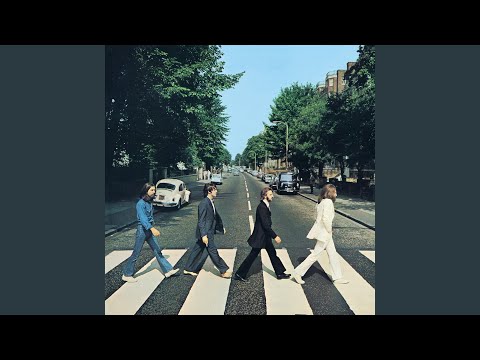
Exhibits A, B, and C in this place-scene synergy argument are records consciously connected to place. Exhibit A is the granddaddy, Abbey Road by the Beatles. The last album recorded by the band (although it was released before Hey Jude and Let It Be), Abbey Road is the Beatles at their most Beatlesque, and yet each member is in their own zone, venting their frustrations with the group and foreshadowing their post-band life. Paul gripes about the band’s finances and dreams about running away with his wife, Linda, on “You Never Give Me Your Money”; George plays hooky from a contentious finance meeting and writes “Here Comes the Sun” as an ode to brighter days to come; John mocks each band member (including himself) in “Come Together.” Even Ringo gets a track on there, wistfully imagining the happy elsewhere of “Octopus’s Garden.”
The album is named after the street on which their recording studio (also named after the street) is housed. As I learned from Steve Turner’s fantastic book A Hard Day's Write, the songs are loaded with contextual imagery. You get a real taste of the setting and the scene that surrounded the band as they recorded their swan songs.


Friday, October 22, 2021
The Resiliency of Spirit and the Banality of Evil: Excerpts from Middling
I write a quarterly newsletter called Middling, in which I reflect on books, music, work, and getting older. My next issue is going out soon and I'd love for you to get it. You can sign up here. What follows is an excerpt from the fall 2020 issue.***  As with everything in 2020, my “Year of Deep Reading in Authoritarianism” got derailed a bit, but along the way I managed to pick up the brief Russian novel One Day in the Life of Ivan Denisovich, by Aleksandr Solzhenitzyn. I expected it to be longer because, you know, Russian literature, but it really is one day, following a prisoner in the gulags as he maneuvers and manipulates to get a little extra gruel, the last puffs of someone else’s cigarettes, and the least awful work assignments. It’s remarkably evocative—I found myself immersed in every frigid moment.
 Somewhere—I don’t recall where—I stumbled on a delightful anecdote about existentialist novelist Franz Kafka. As the story goes, late in his life (he died young) he found himself in a park one day and saw a little girl crying alone. He thought she might be lost and asked if she needed help. It turns out she had lost her doll and could not be consoled. So Kafka invented a story about the doll, which became a story about himself (he was the doll’s postman), which became a daily encounter between him and the girl. The story is perhaps apocryphal and the letters he wrote in the doll’s name apparently lost forever, but the whole thing just fills me with hope for humanity. Kafka and the Travelling Doll can be read in one sitting, but I suspect if you read it once you’ll read it again, and maybe again and again.
I started out [2020]—I can’t imagine why—wanting to read as much as I could about fascism. It’s a fairly common practice for me to identify a theme for my reading for the year, and this year, that was it.

In the middle of this vivid portrayal of the absurdity of tyranny, Ivan is tasked with bricking over a broken window in an abandoned building. Ivan is a mason, and as he sets out to do the task, the tone of the novel shifts from oppression to vocation: he is (once again) a master, practicing his craft with care and precision. For a few hours he discovers and celebrates his dignity. Then he goes back to the prison camp. Worth reading for its arresting portrayal of the resiliency of spirit and the banality of evil.

Wednesday, October 20, 2021
We Are Gen-X After All: Excerpts from Middling
I write a quarterly newsletter called Middling, in which I reflect on books, music, work, and getting older. My next issue is going out soon and I'd love for you to get it. You can sign up here. What follows is an excerpt from the fall 2020 issue.***
I read once that Aimee Mann has assured us she is not depressed. That’s surprising to most people since so many of her songs are melancholy bordering on bleak. But being something of a melancholic myself, I think I get it.
I discovered her 2017 award-winning Mental Illness by accident and added it to my birthday wishlist; the pink vinyl in die-cut sleeve arrived at my doorstep and I dove right in. One listen and I declared her the voice of my generation. Time will tell if the title sticks—or if anybody even cares; we are Gen-X, after all.
I don’t think of Mann as a folk artist, but Mental Illness won the folk album Grammy in 2018 and understandably so. The tracks weave together seamlessly, setting a mood quickly and staying there determinedly. It’s an ode to that popular definition of insanity: doing the same thing over and over and expecting a different result. I keep listening to it because I’m pleased with its effect on me.
Monday, October 18, 2021
Unconscious Approaches to Each Ensuing Crisis: Excerpts from Middling
I write a quarterly newsletter called Middling, in which I reflect on books, music, work, and getting older. My next issue is going out soon and I'd love for you to get it. You can sign up here. What follows is an excerpt from the fall 2020 issue.*** 
At the outset of 2020 I knew a few things:
(1) I would be turning fifty in a few months;
(2) I would be voting for a new president—any new president—a few months after that; and
(3) I would be finishing up a fifteen-month leadership training program for work.
I hadn’t anticipated doing virtually all of this from my basement while I waited out a killer virus. I also hadn’t anticipated that the coach/mentor I was paired with for the training program would be such a gift.
I’ve not really been coached before. I’m not sporty, for one, and I’m kind of a contrarian, so the idea of someone speaking directly into my day-to-day experience was not terribly appealing. I didn’t know what to talk about or how to talk about it. I didn’t know what questions to ask. But Mark was remarkable, gently probing and graciously interrogating my unconscious approaches to each ensuing crisis. I found a little footing after each monthly call, and I learned some practices that have helped me regularly regain my sense of self since the monthly calls ended. ...
So if you’re struggling to keep your head up, give me a shout. I know a guy.

Friday, July 23, 2021
Hope Is a Matter of Vision: Excerpts from Middling
I put out an occasional newsletter about music, books, work, and getting older. You can subscribe to it in the sidebar. My next issue is coming out next week and I'd love for you to get it. Here's a taste of what happens there: This is from last summer's issue, in which I reflect on the experience of turning fifty.
***
Our publishing house sponsored an online event called the Spiritual First Aid Summit. It’s still online if you’d like to see it; really great and practical presentations from a broad swath of religious leaders, hosted by the Humanitarian Disaster Institute. Woven into the event was our recent release The Message of Hope, a curated collection of passages from The Message version of the Bible.
I’m very proud of this little collection, which isn’t just some hope-bludgeon that denies and avoids hard times and hard things. The book begins not with hope but lament, because hope is not something we begin with but something we search for. Lament is then put in conversation with the promises God makes in the Scriptures, which points us to an assurance of God’s love and newfound trust that God is with us and for us. Ultimately hope is a matter of vision—a way of seeing the world without being undone by what we see. Some projects work on me as I work on them; The Message of Hope is one of those. As Emily Dickinson writes of hope,
I’ve heard it in the chilliest land—
And on the strangest Sea—
Yet—never—in Extremity
It asked a crumb—of me.
Or, as God puts it in the Scriptures,
Your God is present among you,
A strong Warrior there to save you.
—Zephaniah 3:17, The Message
And on the strangest Sea—
Yet—never—in Extremity
It asked a crumb—of me.
A strong Warrior there to save you.
—Zephaniah 3:17, The Message
Wednesday, July 21, 2021
A Soft Soundtrack of Lowered Expectations: Excerpts from Middling
I put out an occasional newsletter about music, books, work, and getting older. You can subscribe to it in the sidebar. My next issue is coming out next week and I'd love for you to get it. Here's a taste of what happens there: This is from last summer's issue, in which I reflect on the experience of turning fifty.
***
I once read an entire book dedicated to the big transition in pop music that took place in 1970, the year of my birth. As the 1960s gave way to the 1970s, the book argues, a playlist of social disruption ceded airtime to a soft soundtrack of lowered expectations. The Beatles broke up, Simon and Garfunkel broke up, Crosby, Stills and Nash broke up. James Taylor moved into the void with his Sweet Baby James, a record that included, among other things, a veiled reference to the collapse of his own sixties-era band (“Sweet dreams and flying machines in pieces on the ground”) and a cover of “Oh! Susanna,” a Stephen Foster song first made famous by minstrel singers in blackface in the decade before the Civil War. Some progress is not progress.
The book is self-servingly myopic, largely ignoring what was taking place in every genre of pop music (let alone all other music forms) outside of its preselected subjects. But I enjoyed reading it nonetheless, and (melancholic that I am) I find it compelling that the year of my birth could be considered a year of a kind of musical death.
Some spectacular records were released in 1970, including Sweet Baby James (“Oh! Susanna” notwithstanding, it deserves its popularity), Bridge over Troubled Water by Simon and Garfunkel, Moondance by the great Van Morrison, and the soundtrack to Jesus Christ Superstar, not to mention two records from the Beatles (Hey Jude and the immortal Let It Be) and Stevie Wonder’s wonderful Signed, Sealed, and Delivered. You can hear the sixties-fatigue in the title tracks from The Beatles and Simon and Garfunkel, and in Wonder’s plaintive “Heaven Help Us All.”
We are also, notably, confronted with the harsh reality that even when we grow tired of the hard things in the world, they don’t just go away because we wish it. As CSNY sang about the Kent State shooting that year, “How can you run," they shouted in four-part harmony, "when you know?” Heaven help us all, indeed.
Monday, July 19, 2021
When I Was Younger: Excerpts from Middling
I put out an occasional newsletter about music, books, work, and getting older. You can subscribe to it in the sidebar. My next issue is coming out next week and I'd love for you to get it. Here's a taste of what happens there: This is from last summer's issue, in which I reflect on the experience of turning fifty.
***
I used to bob or bang my head in unison with The Who (“Hope I die before I get old!”) and later R.E.M. (“I can’t see myself at thirty!”). Somewhere along the way I started to stare my future in the face to a soundtrack of Neil (ironically) Young: “Old man, take a look at my life; I’m a lot like you.” The words of Steely Dan (“Are you reeling in the years? Stowing away the time?”) sent me into moments of circumspection teetering on the edge of existential crisis. I began to bob and bang my head to the (ironically) Old 97s (“I used to be the new kid!”) and to Ben (putting the old in) Folds: “Once you wanted revolution; now you’re the institution” and “He’s forgotten but not yet gone.”
Now the day has come. I am what I am, and what I am is old. If I happen to forget now and then (something that happens to those of us of advanced age), there’s always some snarky millennial nearby ready to shock me back into awareness.
People who are older still than I am occasionally pat me on the head when I fret about the aging process, which is comforting in a way. I have ample role models for aging well. But it’s the number—the roundness of it, the ffffiness of it—that stresses me out. I’m closer to a century of life than I am to my birth—a fact that naively presupposes that I’ll make it to a hundred without my heart stopping or my bank account running out of money. Fifty is a slap in the face, a rude awakening to the reality that we are all of us living on borrowed time.
Shortly before John Lennon turned twenty-five he wrote the immortal words “When I was younger, so much younger than today, I never needed anybody’s help in any way. But now those days are gone; I’m not so self-assured.” Isn’t that cute? That was less than a year before he called the Beatles more popular than Jesus. It was, in any case, an insightful line: The young are blessed with audacity, a sense of permanence and invulnerability. Only time can whittle away at it.
Fifteen years later John wrote a song called “Borrowed Time,” drafted shortly before he turned forty and recorded a few months before he was shot and killed. By this time “When I was younger” has given way to “Now I am older”; the desperation that fueled “Help” has given way to an optimism born of humility and hope:
The more that I see the less that I know for sure...
The future is brighter and now is the hour.
Humility and hope are not bad gifts to carry with me into my fifties, I suppose. I observe them in my own elders, the people I look to as guides for this new season. I look for them in myself as well, and on good days I find them there. On bad days I try to remind myself that they’re only hidden, not lost, and i can still recover them if I put in the effort.
Friday, April 02, 2021
The Virtue, Gift and Discipline of Secrecy: Excerpts from Middling
I write an occasional newsletter (quarterly when I don't forget) to friends and family about my life: music, books, work, and getting older. I'd love to send it to you. Sign up for Middling here. What follows is an excerpt from the winter 2020 issue--before the whole world shut down.
***
Considering how regularly I assail you with blog posts, tweets, instas, and newsletters, you might be surprised that a favorite recent read of mine is titled How to Disappear. Akiko Busch sucked me in with her introductory chapter, as she sat quietly in a forest observing how intentionally most of creation seeks to hide. That insight springs into a series of essays on the virtue, gift and discipline of secrecy—of not making a scene of ourselves, of allowing ourselves to be simply part of something larger. I was drawn to the book by the title, but I moved it to the top of the pile after someone suggested to me that I was too power-hungry, a critique that comes up occasionally enough that I can’t ignore it even though I kind of resent it. If How to Disappear isn’t still my favorite read nine months from now, I’ll be surprised and I’ll surely let you know.
A much less transformative but similarly knowing book I read recently is The Lager Queen of Minnesota. I heard it praised as an homage to the Midwest, and that sounded pretty good to me. And it is quite good—keenly insightful about how midwestern relationships work, even when those relationships proceed without contact over the course of decades. I want to give it to my mom because I think she’ll like it, and I want her to give it to her siblings because she thinks they’ll like it.


Wednesday, March 31, 2021
Anachronistic Today: Excerpts from Middling
I write an occasional newsletter (quarterly when I don't forget) to friends and family about my life: music, books, work, and getting older. I'd love to send it to you. Sign up for Middling here. What follows is an excerpt from the winter 2020 issue--before the whole world shut down.
***
I got some great music for Christmas. A new record by the Avett Brothers, the debut album of the Americana supergroup the Highwomen, a three-disc concept album by Sleeping at Last, and the thirtieth-anniversary reissue of one of the most personally significant records of my life.
Shawn Colvin is what might be called a folk music superstar. Her music has been the soundtrack to several significant points of my life: I first heard her cover of “Every Little Thing She Does Is Magic” by the Police while Kara and I were hot-tubbing on our honeymoon, and her collaboration with Steve Earle on the Beatles song “Baby’s in Black” was playing when a giant truck pulling a giant trailer plowed into the back of our one-week-old Toyota RAV4. My pastor and I figured out that we were probably at the same Shawn Colvin concert in the student activity center at Northwestern University in the early 1990s. But before all that, Shawn Colvin was the artist behind one of the first CDs I ever bought.
Steady On would become the Grammy winner for best contemporary folk album of 1991. (How she won two years after the fact is beyond me.) While aging teen idol Donny Osmond was reinventing himself as the “Soldier of Love,” Depeche Mode was milking the life out of “Your Own Personal Jesus,” and Milli Vanilli was pretending to sing “Blame It on the Rain,” Shawn Colvin was quietly strumming the opening chords to the title track and offering an ode to vulnerability:
“China gets broken,
and it will never be the same.”
It only got better from there, with the second track my favorite at the time.
“You’re shining—I can see you.
You’re smiling; that’s enough.
I’m holding on to you like a diamond in the rough.”
I had tracks I preferred over others, of course, but I very nearly wore the grooves off that CD. (Or however the technology works.) It occurs to me as I write this that this CD, still in my possession, is older than at least one of my coworkers. In the past that would have sent me into a fetal position, but I seem to be coming to peace with my advanced age.
Anyway, this year Shawn Colvin celebrated her thirtieth anniversary as a recording artist with a track-by-track return to this first album. Stripped away are the 1980s production values, tastefully executed at the time but certainly anachronistic today. The heart and soul of the record remains: Piercing and sober storytelling over lovely melodies and expert guitar work. Nobody does it like Shawn Colvin, and these songs prove it just as effectively as her later, more mature work.
I’ll draw your attention to two songs from the record. The first, “Cry Like an Angel,” was the song I turned to after terrorists flew two planes into the World Trade Center in New York City on September 11, 2001, and aimed a third plane at the Pentagon. “The streets of my town,” she prophesied in 1989, “are not what they were. They are haloed in anger, bitter and hurt. ... May we all find salvation in professions that heal.”
You’re smiling; that’s enough.
I’m holding on to you like a diamond in the rough.”
The second was one of the lesser lights to nineteen-year-old me, but it’s the song she used to promote this new record, and it’s doing it for me quite nicely these days. It’s hard to believe she had this much soul when she recorded it in her thirties; I don’t mean that as an insult to my thirty-something readers (that’s an age range, not a quantity), only to point out just how much soul she crams in there.
Monday, March 29, 2021
There Was a Chance 2020 Would Be Great: Excerpts from Middling
I write an occasional newsletter (quarterly when I don't forget) to friends and family about my life: music, books, work, and getting older. I'd love to send it to you. Sign up for Middling here. What follows is an excerpt from the winter 2020 issue--before the whole world shut down.
***
The safest place
Is the more or less middling: the mean average
Is not noticed.
—W. H. Auden, The Age of Anxiety
When I was a kid, I thought about 2020 a lot. That would be the year I would turn fifty, and at the time fifty seemed to me about the oldest a person could get. To speculate so far into the future seemed both pointless and irresistible. What would the world be like? What would I be like?
There were good reasons to wonder. When I was a kid, my society was enduring the aftermath of the abrupt end of a corrupt presidency. We were facing global tensions on several fronts; I read more than one library book about inter-continental ballistic missiles before I was ten. The Middle East was a powder keg. The economy was sputtering. People hadn’t learned not to pollute yet. There was disco music.
It wasn’t all bad, of course. Sure, we had Barry Manilow to deal with, but we also had the Ramones. (And Schoolhouse Rock: Rest In Peace, Jack Sheldon.) Sure, the rain had acid in it, but there was also this owl and this Native American guy actively appealing to us to give a hoot and not pollute. There was a chance I’d make it to fifty. There was a chance 2020 would be great.
I think about the past differently than the future or the present. In my memories, the hard stuff is less hard, because I know I’ve survived it. The scary stuff is less scary because it’s become more known than unknown. Even the lofty ambitions are right-sized by the passage of time. We aren’t cured of the past—we carry it with us—but the passion and the pain of it levels off. We become detached enough from it to consider it with grace.
In a matter of months I’ll be hitting my fiftieth birthday. Having reached this year of my preoccupation, I suppose it’s time to be preoccupied with something else—2070, perhaps, when I'll be a hundred years old, which seems like just about the oldest a person can get. Meanwhile, it occurs to me that there will be people thinking back to this unfolding decade with the same mix of melancholy, nostalgia, and (I hope) gracious detachment as I now think of the 1970s. Maybe one of those people will be me. Maybe it will be you. Maybe we should start practicing such gracious detachment even today.
"Fifty Nifty," Schoolhouse Rock
Is the more or less middling: the mean average
Is not noticed.
—W. H. Auden, The Age of Anxiety
Monday, September 21, 2020
Hashtag Winning: Excerpts from Middling
I write an occasional newsletter (quarterly when I don't forget) to friends and family about my life: music, books, work, and getting older. I'd love to send it to you. Sign up for Middling here. What follows is an excerpt from the fall 2019 issue.***  I had a number of books that came to mind, including the one I was still reading as I flew to Nashville for the retreat: The Nickel Boys, by Colson Whitehead. This novel inspired by true events is set in the mid 1960s at a “reform school” for boys. All the students are tyrannized by the staff, but the black kids are routinely terrorized and brutalized. Whitehead is a master at creating characters and carrying the reader into and through terrible things, and he does so here again. Schools like this one existed in my lifetime. Maybe they still do. I’m haunted by that: How many other atrocities are we allowing to exist, and why are we allowing it?
 But I hadn’t finished The Nickel Boys yet, so instead I put forward Mandela and the General, a beautifully drawn graphic novel recounting the true story of how newly elected South African President Nelson Mandela, who was actively dismantling the century-old system of apartheid that had privileged whites over people of color, met with and earned the respect and loyalty of the leader of a nationalist resistance group bent on taking South Africa back for the whites. A story I’d never heard before — powerful, compelling — and nobody else had picked it. #winning
***
Thanks for reading! If you'd like to get Middling in your in-box, give me a shout and I'll set you up.
Every September I attend a retreat for the Academy of Christian Editors. A feature of that retreat is a sharing circle where we each get roughly a minute to introduce our favorite book we read over the past year. You can see this year’s complete list here.
I always find this exercise a little stressful — I want my choice to be distinct and memorable, something I won’t be judged for except to be judged as distinct and memorable myself.


Subscribe to:
Posts (Atom)
Both Inspiration and Cautionary Tale: Excerpts from Middling
What follows is an excerpt from the Winter 2021 edition of Middling, my quarterly newsletter on music, books, work, and getting older. I...
-
 In a previous post I recounted the eight priorities of making a scene, according to Talking Heads frontman David Byrne in his recent book H...
 -
 I've recently begun reading the collected novels and short stories of Sherlock Holmes as written by Arthur Conan Doyle. I'm a trend-...